Data, Information, Evidence: The Architecture of Analytical Proof
Most humanitarian teams have data. Many have information. Few produce data to provide evidence.
The distinction matters more than it sounds. A SitRep that lists figures without testing them against a hypothesis is not evidence. A dashboard that displays trends without explaining why they happened is not evidence. A brief that recommends action based on raw figures alone is not evidence.
This guide walks through the three-level hierarchy that separates raw input from analytical proof. It is the foundation for rigorous humanitarian analysis and the prerequisite for using AI well.
Why this hierarchy matters
Humanitarian decisions get delayed, defunded, or redirected when analysts cannot show evidence. Donors silently ask three questions of every brief:
- What is happening?
- How do you know?
- Why does this matter for the decision I am about to make?
Each question lives at a different level of the hierarchy. A confident answer needs all three.
Level 1: Data — the raw input
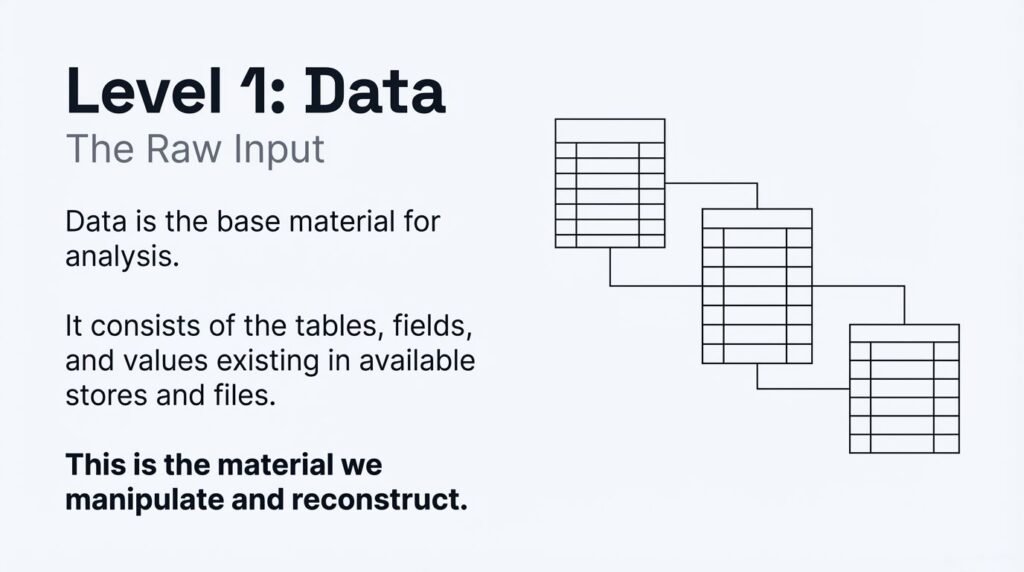
Data is the base material for analysis. It consists of the tables, fields, and values existing in available stores and files.
- Beneficiary registration records.
- Cluster 4W trackers.
- Survey responses (KoboToolbox, ODK, ONA).
- Health facility caseload logs.
- Market price monitoring lists.
This is the material we manipulate and reconstruct. It is not analysis. It is the input to analysis.
Rule of thumb. If you can answer it with a row in a spreadsheet, it is data. Not information. Not evidence.
Level 2: Information — the processed content
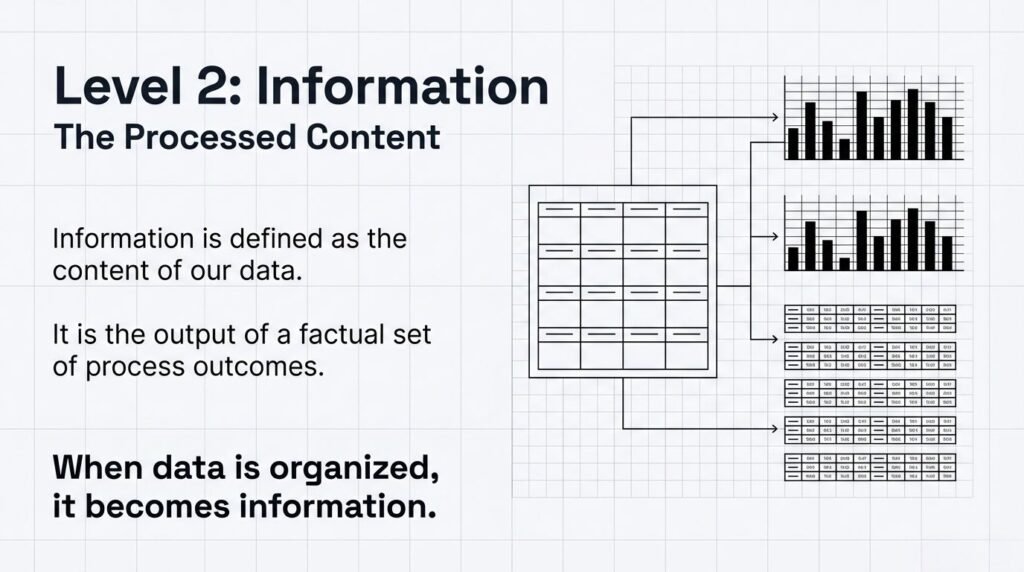
Information is defined as the content of our data. It is the output of a factual set of process outcomes.
When data is organized — sorted, filtered, joined, aggregated, charted — it becomes information.
- Data: 1,247 admission records from three nutrition centers.
- Information: 1,247 SAM admissions across three centers in Q3 2025, a 32 percent increase over Q2.
Information tells you what is there. It still does not tell you why it matters or what to do about it.
The critical distinction
Information vs evidence
Information tells you what is there. Content.
Evidence tells you why. Reason.
This is where most humanitarian briefs go wrong. They present rich information and call it evidence. The donor reads it and still does not know what decision to make.
Level 3: Evidence — the catalyst is hypothesis testing
Evidence does not exist inherently in the data. Evidence is what data and information become when they are tested against a specific claim.
Humanitarian analysts must move beyond possessing data. We must actively analyze materials against hypotheses. Evidence is the material selected to support or refute a specific claim.
From the Architecture of Analytical Proof
Two scientific reasoning rules:
- Falsify. Look for the data that would prove your hypothesis wrong. If none exists, you have not tested anything.
- Corroborate. If the hypothesis survives the most rigorous standards of evidence and scrutiny, accept it. Until then, hold it as a working theory.
The four-step move from data to evidence
- Collect data. Raw values from the field, the cluster, the partner.
- Process into information. Sort, aggregate, visualize, narrate.
- Test against hypotheses. What claim is this information supporting or refuting?
- Generate evidence. Select the material that proves or disproves the claim. Discard the rest.
The discipline is in step three. Most teams skip it. They go straight from information to recommendation, and the recommendation does not hold up under senior review.
How to apply this in your next deliverable
Before you write the next brief, write the hypothesis at the top of the page. One sentence.
- Bad: “Food security is worsening in Region X.”
- Good: “IPC Phase 3+ population in Region X will exceed 2.4 million by March 2026 unless cash assistance is scaled by Q1.”
A specific hypothesis forces you to select the right evidence. A vague one lets you fill the brief with information that proves nothing.
Where AI fits
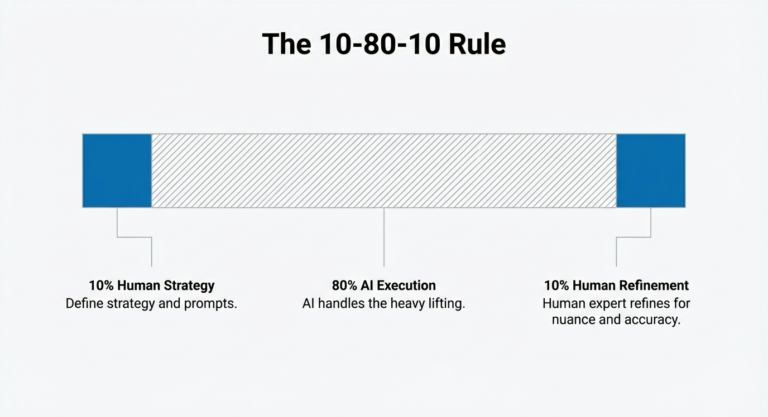
AI accelerates the data-to-information step. NotebookLM extracts figures from long PDFs. ChatGPT and Claude organize and visualize. The 10-80-10 method structures the workflow.
AI does not produce evidence on its own. The hypothesis testing — and the judgment of what counts as proof — stays with the analyst.
Continue reading
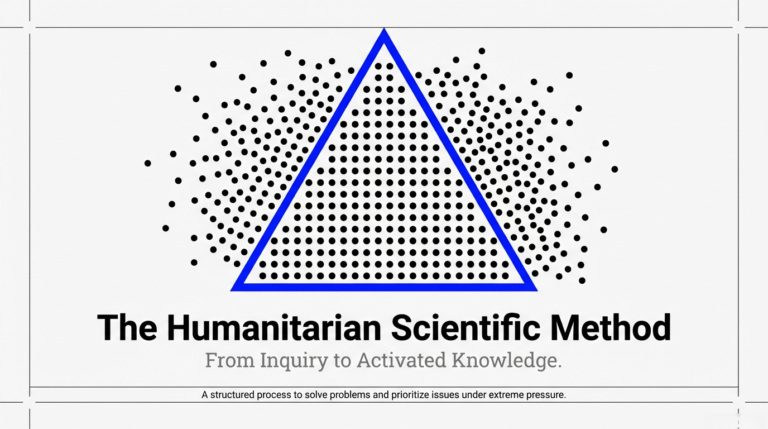
- The humanitarian scientific method
- Observation groundwork: where rigorous analysis begins
- From evidence to decision: frameworks for humanitarian analysts
Want the full system? The HumGPT course teaches the same workflows on real humanitarian deliverables: SitReps, donor briefs, country risk profiles, secondary data reviews, and more.
$39 (was $197). Lifetime access. 14-day money-back guarantee. Enroll in HumGPT.
Frequently asked questions
What is the difference between data and evidence?
Data is the raw material — tables, fields, values. Evidence is the material selected to support or refute a specific hypothesis. Data sits in a spreadsheet. Evidence answers a question.
What is the difference between information and evidence?
Information tells you what is there. It is processed data — sorted, aggregated, visualized. Evidence tells you why it matters. The catalyst is hypothesis testing.
Why do humanitarian briefs often present information as if it were evidence?
Because the data-to-information step is faster and easier than the hypothesis-testing step. Analysts under deadline pressure often skip the discipline of selecting only the material that supports or refutes a specific claim.
Can AI produce evidence?
AI can accelerate the data-to-information step and propose hypotheses. It cannot do the analytical selection of what counts as proof. That judgment stays with the analyst.
How do I write a strong hypothesis?
A strong hypothesis is specific, falsifiable, and decision-relevant. It states a claim, a population, a geographic scope, and a timeframe. It is the kind of statement a senior reviewer can test.